
Community Economic Development (CED) is an essential tool for combating poverty and promoting more inclusive, resilient, and sustainable societies. It is an approach that places communities at the center of solutions, fostering the active participation of their members, empowering vulnerable groups, and creating economic opportunities that transcend generations. In a world where more than 700 million people still live in extreme poverty, the need to promote local and global strategies is more urgent than ever.
Rotary has a number of Rotary Action Groups that support various causes. For those of us working within RAGCED, after Rotary has delivered clean potable water and supported health programs, the economy is the next step — as people need a job to feel worthwhile and contribute meaningfully to society.
CED and the United Nations 2030 Agenda
One of the most influential international frameworks in this area is the United Nations 2030 Agenda. Sustainable Development Goal (SDG) number 1, "No Poverty," reminds us that eradicating poverty in all its forms is not only a moral imperative but also the foundation for building stable and peaceful societies.
SDG 1 emphasizes that poverty is not only a lack of income but also a lack of access to education, healthcare, decent housing, and employment opportunities. In this context, CED is a key instrument for transforming realities, as it works from the grassroots and adapts to the specificities of each community.
The Role of Women's Empowerment
Within economic development strategies, women's empowerment is central. Studies have shown that when women access economic opportunities, they directly improve nutrition, education, and the health of their families. Women tend to reinvest a large portion of their income into their households, creating a virtuous cycle that benefits the entire community.
Programs such as Village Savings and Loan Associations (VSLAs) are a clear example of how women's empowerment can be fostered. These associations, promoted in many rural communities, allow women to organize themselves to save, receive small loans, and invest in small businesses or productive activities. These initiatives not only improve family income but also strengthen self-esteem and female leadership in spaces traditionally dominated by men.
Access to microfinance is another powerful tool. Small loans allow entrepreneurial women to start or expand activities ranging from artisanal workshops to small agricultural businesses. Although the amounts are usually modest, the social impact is significant: local jobs are created, the community economy is diversified, and financial independence is promoted.
The Social Impact of Community Economic Development
CED goes beyond generating income. Its impacts encompass social, cultural, and environmental dimensions:
Communities with stable, sustainable income can invest in children's education, ensure better nutrition, reduce forced migration, and build resilience to crises.
CED fosters social cohesion. When members work together on productive projects, mutual trust, cooperation, and social capital grow.
Reduction of inequality is another key impact. By empowering marginalized groups — women, youth, and rural communities — more equitable opportunities are generated, closing social and economic gaps.
RAGCED and the Rotary Foundation in Action
The Rotary Action Group for Community Economic Development (RAGCED) (www.ragced.org) is a central player in this fight. This network of Rotarians committed to CED seeks to inspire, connect, and support Clubs and Districts in projects that promote self-sufficiency and economic resilience. Through training, technical resources, and experience sharing, RAGCED multiplies the impact of local projects, ensuring their sustainability and scalability.
The Rotary Foundation (www.rotary.org) provides a financial and strategic framework to support these efforts. Global grants finance local projects that generate lasting community impact. They require detailed planning, partnerships between Clubs in different countries, and a focus on Rotary Areas of Interest, including Community Economic Development.
Through tools like the Theory of Change Model, Community Assessment Tools, and Guides to Global Grants, planning and managing sustainable, measurable, and impactful projects has never been easier.
District Designated Funds (DDFs) also provide flexible funding for local or international initiatives. Additionally, the Program of Scale allows Rotarians to expand a local project into a scalable, replicable program, generating even greater social impact globally.
How a Rotary Club Can Get Involved
A Rotary club can play a crucial role in combating poverty locally. Practical ways include:
Identifying local needs – Consult community members through surveys, meetings, or focus groups.
Training projects – Workshops on entrepreneurship, financial literacy, or technical skills.
Support for microentrepreneurs – Facilitate access to microcredit or create local revolving funds.
Promoting community savings – Support savings and loan associations, particularly for women and youth.
Strategic partnerships – Collaborate with NGOs, businesses, or government entities to maximize impact.
Using Global Grants and DDFs – Leverage Rotary resources for sustainable, larger-scale projects.
Measuring impact – Establish indicators during project planning to track real improvements in community living conditions.
We know we do good in the world, but it’s essential to measure how and by how much to improve future projects. Let’s do good, better!
Community Economic Development is not a luxury — it is an urgent necessity for a more just and sustainable future. Initiatives promoted by RAGCED and the Rotary Foundation show that, with vision, commitment, and collaboration, profound and lasting change is possible.
Empowering women, providing microfinance, creating savings associations, and investing in self-sustaining projects not only reduce poverty but strengthen dignity and hope. For Rotary clubs, engaging in these missions is a concrete way to live the ideal of "Service Above Self," contributing directly to UN SDG 1 and building a more equitable world. Every project, partnership, and step toward community self-sufficiency strengthens the global fight against poverty.
Join us at www.ragced.org
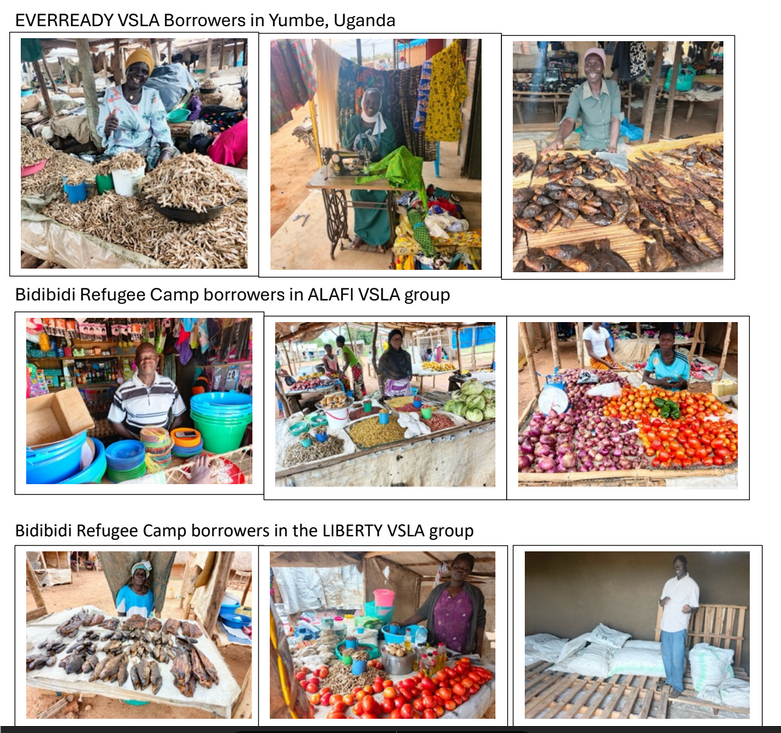
The photos attached are from the YUMBE project of TCP Global — a project partially financed using RAGCED resources and included with permission.
Wally Gardiner
Chair/President (RY 2025-27)
RC of High River AB, Canada